 ZAR
 KES - Kenya
 UGX - Uganda
 TZS - Tanzania
 RWF - Rwanda
 NGN - Nigeria
 USD - Zimbabwe
 GHS - Ghana
 ETB - Ethiopia
 ZMW - Zambia
 USD - International

South African small businesses face long payment terms from larger customers, load-shedding that disrupts trading days and a tax calendar that does not wait. Good cash flow management will not change any of that, but it will stop those pressures from becoming a crisis.
Measure before you manage
Cash flow problems are easier to solve when you see them coming. Each week, check:
- the balance across your bank accounts,
- debtors: what customers owe and how overdue it is,
- creditors: what you owe and when it is due,
- tax: VAT, PAYE and UIF you have collected but not yet paid to SARS.
Ten habits that protect cash
- Invoice immediately after delivery or completion.
- State the due date clearly on every invoice.
- Send reminders on the due date and a week after.
- Offer an easy way to pay, such as a card or instant EFT link through your online payments provider.
- Ask for deposits on custom or large orders.
- Check credit before giving terms to a new customer.
- Negotiate supplier terms that match what you give customers.
- Keep stock lean on slow-moving lines.
- Separate tax money into its own account.
- Reconcile weekly, using our guide to reconciling payments in South Africa.
Recurring revenue helps
Service contracts, maintenance plans and retainers bring predictable income. NaliSuite Subscriptions issues those invoices every month without anyone remembering to.
A forecast you will actually use
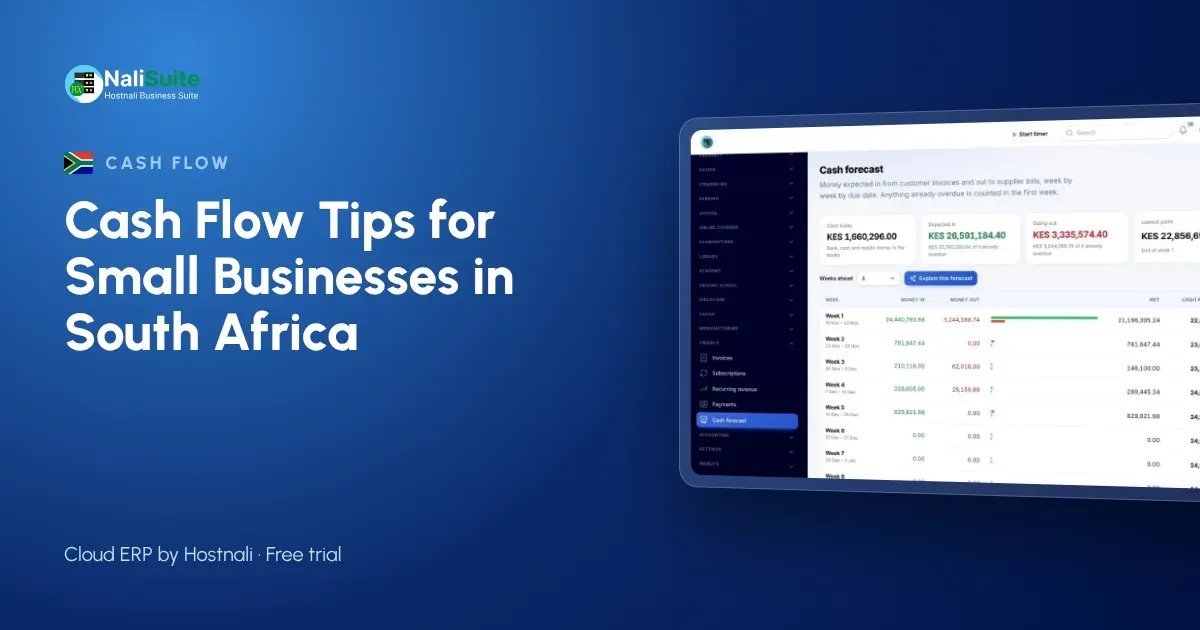
Use a simple 13-week forecast. Start with today’s bank balance, add expected receipts, subtract known payments, week by week. Update it every Monday. When a week turns negative, you have time to act: chase a large debtor, delay a purchase or talk to your bank early.
Example: a Durban services firm
A small IT support firm in Durban billed most clients at month end on 30-day terms, so cash arrived up to two months after the work. It moved its regular clients to monthly retainers billed at the start of each month, kept project work on milestone invoices, and switched on automatic reminders. Within a quarter, more than half of its income arrived in the first week of each month, which made salaries and rent far easier to plan.
A second example: a Gqeberha caterer
A catering business in Gqeberha serves corporate events and weddings. It used to pay for food and staff before events and wait weeks for payment. It now takes a deposit when an event is confirmed, the balance a week before the event for private clients, and agrees 14-day terms with corporate clients. Supplier accounts are aligned so that food suppliers are paid after the client’s payment is due. The business stopped using its overdraft within two seasons.
Mistakes to avoid
- Treating VAT collected as income. It belongs to SARS; keep it apart.
- Letting debtor days creep up. Track the average time customers take to pay and act when it rises.
- Buying equipment from operating cash. Large purchases may be better financed than paid from cash needed for wages.
- Ignoring seasonality. December and January can look very different from mid-year.
A 13-week forecast in practice
Take a spreadsheet or a sheet of paper and draw thirteen columns, one per week. In the first row, write the opening bank balance. Below it, list expected receipts: invoices due, retainers and card sales based on recent weeks. Then list payments: salaries, rent, supplier accounts, SARS payments and loan repayments. The bottom row is the closing balance, which becomes the next week’s opening balance. Every Monday, replace last week’s estimates with actual figures and add a new week at the end. Within a month you will know which weeks are dangerous long before they arrive.
How NaliSuite helps
Invoicing and Subscriptions show expected receipts, Purchases shows bills due, and Accounting shows the bank position, which together give you most of the forecast without retyping.
Frequently asked questions
What payment terms should I give business customers?
Many small suppliers use 30 days. Whatever you choose, apply it consistently and print it on every invoice.
How do I handle a customer who always pays late?
Move them to deposits or shorter terms, and stop further credit until the account is up to date.
Will accounting software improve cash flow?
It does not create cash, but it shows debtors, creditors and stock clearly and automates reminders, which shortens the time to get paid.
How do I work out how long customers take to pay?
Compare the date of each invoice with the date it was paid and look at the average for each customer.
Is an overdraft a bad sign?
Not necessarily, but relying on it every month suggests deposits, terms or stock levels need attention.
Should I offer customers instant EFT as well as card?
Offering both gives customers a choice and usually speeds up payment; connect them through your own payment provider account.
Try NaliSuite
NaliSuite Accounting, invoicing and inventory start from R 38 a month. See the plans.