 ZAR
 KES - Kenya
 UGX - Uganda
 TZS - Tanzania
 RWF - Rwanda
 NGN - Nigeria
 USD - Zimbabwe
 GHS - Ghana
 ETB - Ethiopia
 ZMW - Zambia
 USD - International

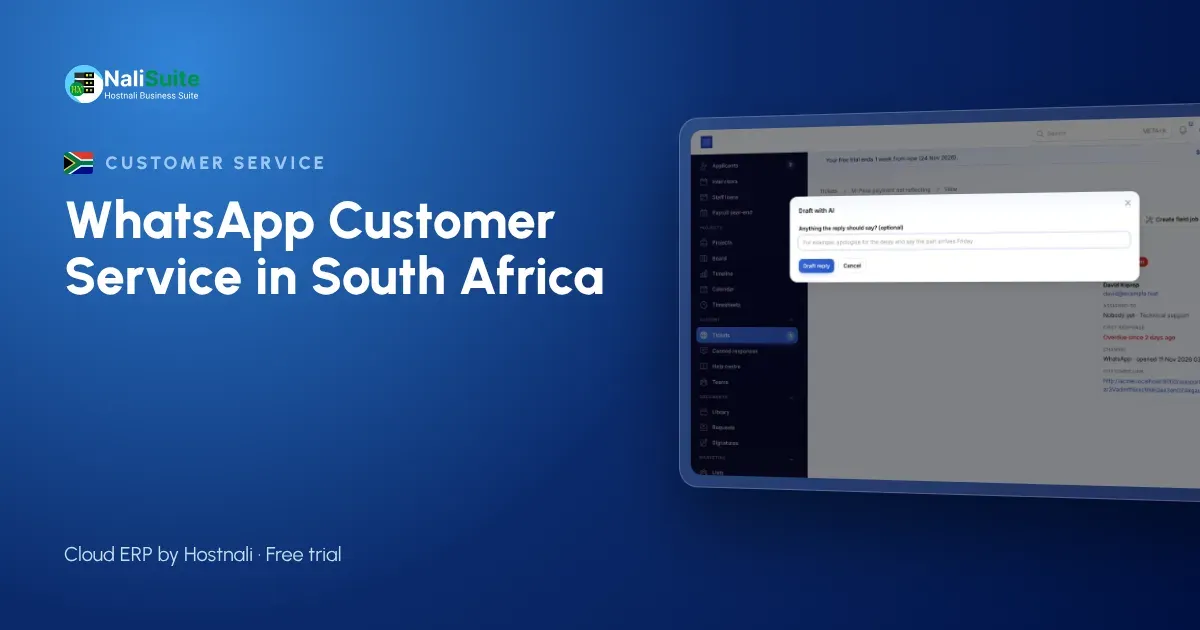
South African customers have made WhatsApp the default way to talk to a business, from booking a service to chasing a delivery. Answering from one shared phone works for a while. Then the business grows, the phone sits with whoever is on shift, and nobody can tell which customer is still waiting.
Why WhatsApp needs a team, not a phone
A single phone on the counter in Johannesburg has three problems. Only the person holding it can reply. The history leaves with that person when they change jobs. And there is no way to see which customers are still waiting. None of that matters at ten messages a day. At fifty, it costs sales.
Imagine a solar installation company in Pretoria. Leads come in on WhatsApp from Facebook ads, existing customers send photos of inverter error codes, and the finance clerk sends quotes and invoices from her own number. When load shedding is in the news, messages triple and the same customer gets answered twice or not at all.
The tools you need
- A business number on the WhatsApp Business Cloud API, so messages reach a shared inbox instead of one phone.
- Tickets with owners and service levels in NaliSuite Helpdesk, so every chat has someone responsible and late ones are flagged.
- Saved replies and AI drafts, so common answers are fast and consistent.
- Quotes, invoices and receipts that can be sent on WhatsApp, from Sales, Invoicing and the point of sale.
- Opt-in broadcasts from Marketing using approved templates.
Write your “who answers what” rules down, share them with the team and set assignment rules in the helpdesk so each chat lands with the right person, whether it comes from Pretoria or abroad.
Keep it polite and keep it legal
WhatsApp feels informal, but it is still your business speaking. Greet customers by name, confirm what you will do and by when, and never send promotions to people who did not ask for them. Approved templates from Marketing, an easy way to opt out and customer data kept in one business system rather than on staff phones protect your reputation in South Africa.
When a chat turns into a sale, send the quotation from Sales and the invoice from Invoicing in the same thread, with a pay link for card or EFT. Everything here is described on the WhatsApp feature page.
Five habits of teams that answer well
- They greet by name and confirm the next step. “Thanks, Amina, we will deliver to Durban tomorrow before noon” beats “ok”.
- They never leave a chat without an owner. Unassigned tickets are reviewed every hour.
- They write things down once. Answers that come up twice become quick replies.
- They close the loop on payments. When the card or bank payment arrives, the customer gets a receipt in the same chat.
- They look at the numbers weekly. Reply times, open tickets and repeat questions tell them what to fix.
An example week
A small team of four in Johannesburg moved its WhatsApp number to a shared inbox on a Monday. By Wednesday the owner noticed that a third of all chats asked the same two questions, about delivery to Cape Town and about payment, and turned them into quick replies. By Friday evening messages were assigned to whoever opened the next morning, and no chat waited more than an hour. Nothing about WhatsApp changed for the customers; what changed was that the business could see every conversation.
WhatsApp service in South Africa: what to keep in mind
South African businesses need to treat WhatsApp numbers and chat history as personal information under POPIA. Keep conversations in one business system rather than on staff phones, send marketing broadcasts only to customers who opted in, and give customers a way to opt out. Quotes and invoices sent in the chat can carry a pay link for card or EFT through your payment provider.
Service businesses in South Africa, such as installers, repair firms and clinics, get as many after-sales messages as sales enquiries. Tag these separately so the technical team in Johannesburg or Cape Town sees them first, and use the customer record to check what was installed and when before replying. Customers notice when you already know their history.
Frequently asked questions
Is WhatsApp marketing allowed under POPIA?
Direct marketing generally needs the customer’s consent, so only send broadcasts to customers who have opted in and make opting out easy. Check the details with your legal adviser.
What happens to chats when a staff member leaves?
When customers write to the business number through NaliSuite, the conversation stays in your helpdesk with the customer record, not on the employee’s phone.
Do I need the WhatsApp Business API?
Yes, to share one number across a team you connect it through the official WhatsApp Business Cloud API. Our team can help a South African business set it up.
Try NaliSuite
NaliSuite brings WhatsApp, helpdesk, sales, invoicing and online payments into one cloud ERP, from R 38 a month. Start a free trial from the plans page and connect your business number.