 ZAR
 KES - Kenya
 UGX - Uganda
 TZS - Tanzania
 RWF - Rwanda
 NGN - Nigeria
 USD - Zimbabwe
 GHS - Ghana
 ETB - Ethiopia
 ZMW - Zambia
 USD - International

South African consumers are used to paying monthly: gym contracts, cellphone plans, streaming and medical aid all come off on a set day. Small businesses that bill monthly, from security companies in Centurion to accountants in Stellenbosch, benefit from that habit, but only if their billing terms are clear and fair.
This guide focuses on designing those terms: how often to bill, on which day, what happens when customers change plans and how to handle late payment. Then it shows how to put them into practice.
Decision 1: The billing period
Monthly suits most services. But consider:
- Weekly: some cleaning or garden services, or casual memberships.
- Quarterly: maintenance contracts and some professional retainers.
- Yearly: software and memberships, often with a discount for paying upfront.
Offering a yearly option at a lower monthly-equivalent price brings cash in early and tends to reduce cancellations.
Decision 2: The billing day
You have two options:
| Option | Works well for |
|---|---|
| One fixed day (e.g. the 1st or the 25th) | Rent, security, contracts; easy to manage |
| Each customer’s start date | Memberships, software; nobody pays for days they did not use |
Many South Africans are paid around the 25th. Billing just after payday, or letting customers choose their day, can reduce failed and late payments.
Decision 3: How customers pay
The two common models are:
- Debit order: you collect from the customer’s bank account on the agreed day. It needs a signed mandate and arrangements through your bank or a debit order provider.
- Invoice with a pay link: the customer receives an invoice and pays by card or instant EFT through a link.
Pay links are quicker to set up and give the customer control. NaliSuite Invoicing puts a link on every invoice to pay online through the provider you connect, such as PayFast; see online payments. EFTs paid without the link can be matched from your bank statement with the bank reconciliation feature.
Decision 4: Changes mid-period
Customers upgrade, downgrade or add services halfway through a month. Decide in advance:
- Upgrades: charge the difference for the rest of the period, or start the new price next period?
- Downgrades: credit the difference, or apply from next period?
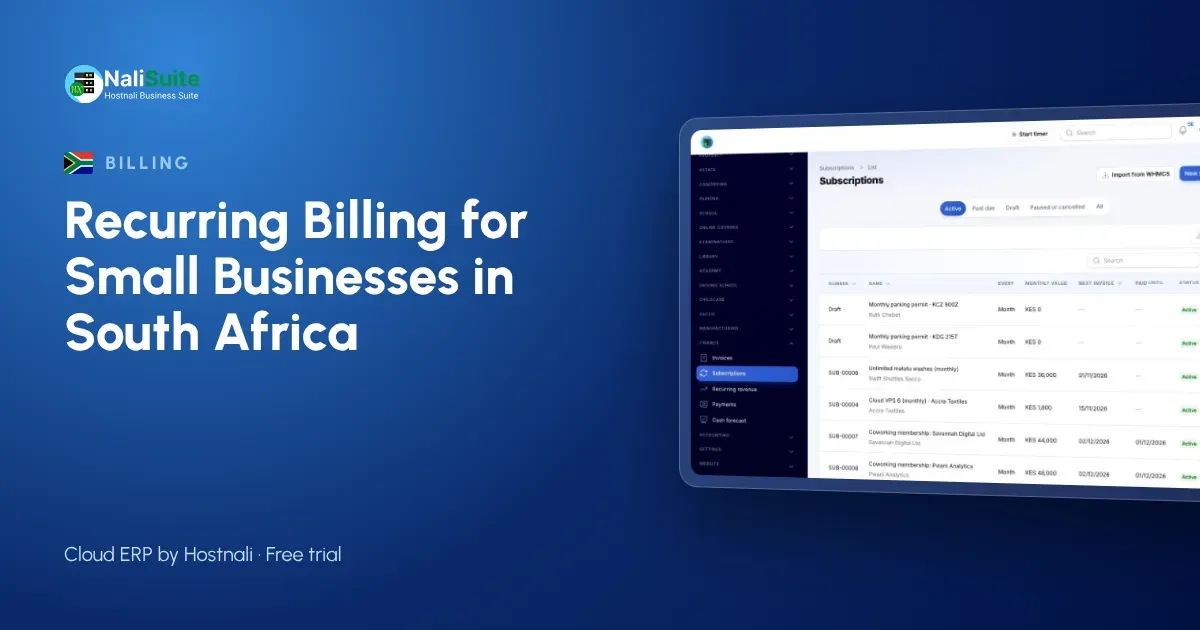
Prorating, which means charging or crediting just for the days remaining, is the fairest and avoids disputes. NaliSuite Subscriptions works out the proration automatically when a plan changes.
Decision 5: Pausing and cancelling
Write down your rules:
- Can customers pause, and for how long?
- How much notice is needed to cancel?
- Is there a minimum term?
Be careful with long fixed-term contracts with consumers: the Consumer Protection Act gives consumers certain rights to cancel fixed-term agreements. Have an attorney check your terms if you use them.
In NaliSuite, you can pause, resume or cancel subscriptions with clear dates, and, if you allow it, customers can do it themselves in the customer portal.
Decision 6: Late payment
Decide your process and put it in your terms:
- Reminder before the due date.
- Reminder on the due date.
- Follow-up a week later, with a statement.
- Service paused after a set period, with notice.
NaliSuite sends reminders before and after the due date automatically, so the process is applied the same way to every customer.
Decision 7: VAT
If you are a VAT vendor, each recurring invoice must show VAT at 15% and meet SARS’s tax invoice requirements. Set VAT on each plan so it is applied consistently. If your turnover is close to the compulsory registration threshold, check the current figure with SARS, because a growing subscription base can push you over it.
Putting the terms into practice
Once the decisions are made:
- Create a plan for each package, with its price, period and VAT.
- Set up a subscription for each customer, with their start date.
- Choose your reminder schedule.
- Publish your terms on your website and on your quotes.
- Turn on the customer portal.
From then on, invoices are created and sent automatically by email or WhatsApp.
Measuring how well it works
Track monthly recurring revenue, new and lost customers and churn. NaliSuite’s subscription dashboard shows these over time. If churn rises after a price increase, you will see it within a month.
Example: a Pilates studio in Durban
A studio with about 150 members billed manually at the start of each month and accepted EFTs with any reference. After setting clear terms (billing on each member’s joining date, a yearly option, pausing for up to a month, and pay links on every invoice) the owner saw fewer late payments and could tell exactly which members were close to cancelling.
Frequently asked questions
Is a debit order better than a pay link?
Debit orders collect automatically but need mandates and a provider. Pay links are simpler to set up. Many businesses start with pay links and add debit orders later.
Can I charge a cancellation fee?
You may, within the law. Check your terms against the Consumer Protection Act with an attorney.
How do I handle VAT on a yearly plan?
Charge VAT on the yearly invoice as you would on any other, at the rate that applies when you issue it.
What about customer data?
Your billing records contain personal information, so POPIA applies. Restrict access and keep data secure.
Try NaliSuite
NaliSuite turns your billing terms into automatic invoices, reminders and online payments for South African customers. Plans start at R 38 a month with a free trial; see the plans or read more about NaliSuite.