 ZAR
 KES - Kenya
 UGX - Uganda
 TZS - Tanzania
 RWF - Rwanda
 NGN - Nigeria
 USD - Zimbabwe
 GHS - Ghana
 ETB - Ethiopia
 ZMW - Zambia
 USD - International

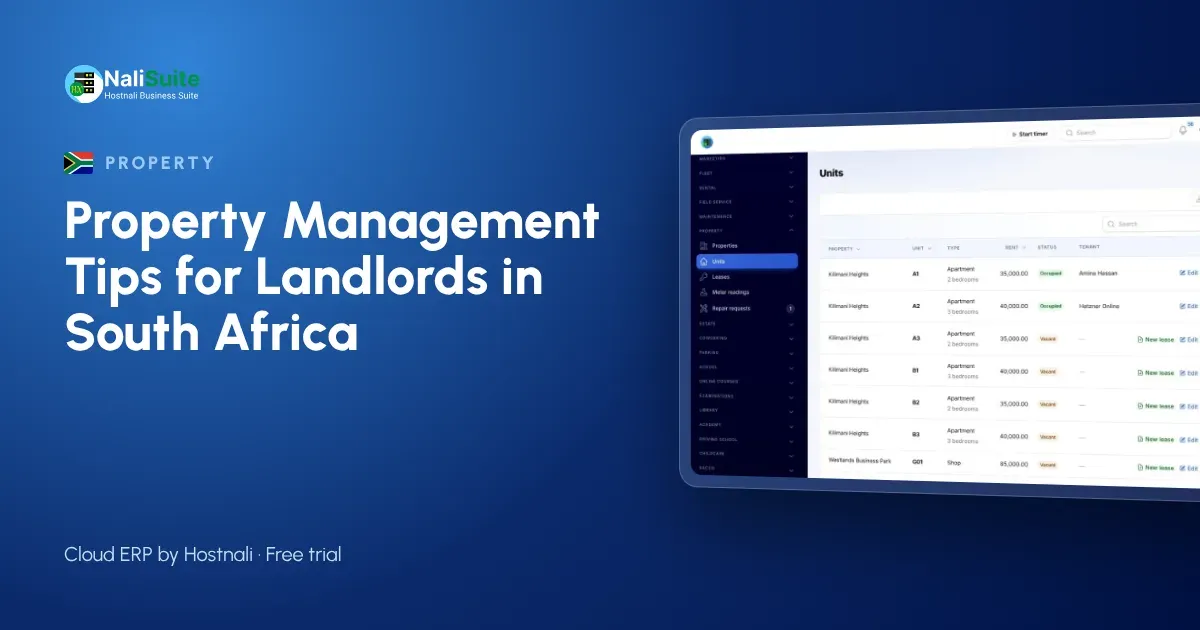
Being a landlord in South Africa is a business with plenty of moving parts: leases and renewals, monthly rent by debit order or EFT, deposits, municipal utility recoveries and maintenance. Whether you rent out a granny flat in Pretoria or manage sectional title units in Cape Town for other owners, good records protect you when something goes wrong. Here are practical tips.
Leases, renewals and increases
A lease is only useful if you can find it. Record the key terms against the unit, store the signed copy alongside, and set a reminder before each lease ends.
If leases include a yearly increase, enter it once and let the next invoice pick it up, rather than relying on memory and a calculator.
One record per unit
Think in units, not buildings. Each flat, room or shop gets its own record: rent, charges, tenant, lease start and end, deposit held and any meter numbers.
When a tenant leaves and a new one arrives, the unit’s history stays, so you can see how long it was empty and what repairs it needed.
A worked example: eight flats in Durban
Picture a landlord with eight flats in a Durban building. Rent is due on the first; electricity and water are recovered from tenants based on sub-meter readings. Two tenants are often late and one moved out leaving a damaged door. When each lease, deposit and meter reading is recorded per unit, invoices go out automatically, late tenants are flagged and the damage is settled against the deposit with a clear statement.
Rent and charges on a schedule
Recurring billing is the single biggest time saver for landlords. Rent, service charge and any fixed charges are invoiced on the same day every period, with utilities added from meter readings.
Tenants receive the invoice by email or WhatsApp with a link to pay by card or bank transfer.
Deposits, EFT and keeping records
Most South African tenants pay by EFT or debit order. Give each tenant a reference and match every payment to their account, so arrears are visible the day they start.
Keep tenants’ personal information secure and use it only to manage the tenancy; POPIA, overseen by the Information Regulator, applies to the records you hold. For anything about lease terms, deposits or evictions, check the rules that apply to you with a property professional.
See who owes what, and for how long
An arrears report shows each tenant’s unpaid balance and how old it is. Check it weekly, call anyone more than a few days late and agree a plan in writing if they are struggling.
The longer a debt is left, the harder it is to collect. Early, friendly contact recovers more than late, angry contact.
Maintenance requests with a paper trail
A burst pipe reported by phone and forgotten becomes a damaged ceiling. Log each repair request with the date and the unit, and track it until it is closed.
Link the repair cost to the unit so your property reports show true income after maintenance.
A simple move-in and move-out routine
Most deposit disputes start with a missing record of the unit’s condition. At move-in, walk through the unit with the tenant, note the condition room by room, take photos and have both sides sign. Record the meter readings on the same day.
At move-out, repeat the walk-through against that record. Anything that differs is easy to agree on, and the deposit can be settled the same week.
How NaliSuite helps landlords
NaliSuite’s Property Management add-on is built for this: properties and units with occupancy, leases with deposits and yearly increases, rent and service charge invoiced every period with part months worked out, utility billing from meter readings, arrears and late fees, repair requests from tenants and statements for the owners you manage for.
It uses the same billing engine as Subscriptions, tenants pay through card and online payments, and they can see invoices and report issues in the customer portal. Estates and gated communities can add the Residents’ Associations add-on for service charges, levies, gate passes and AGM votes.
Know what each property really earns
Rent received is only half the story. With repairs, utilities and fees recorded against each property, you can see the net income per unit and per building.
That makes it easier to set rents, plan improvements and talk to your accountant at the end of the year.
Treat tenant records as confidential: follow POPIA, overseen by the Information Regulator, and keep signed leases and IDs in one secure place rather than on several phones.
Frequently asked questions
Can I recover electricity and water from tenants?
Yes. Enter sub-meter readings for each unit and the charges are added to that month’s invoice, with the readings shown.
Can deposits be settled against damage?
Yes. The deposit is held on the tenant’s account and any agreed damage or arrears are settled against it on the final statement.
Is there an extra cost for the property add-on?
Yes. The Property Management add-on is added to any NaliSuite plan and billed with the subscription; plans start from R 38 a month.
Can I import my existing tenants?
Yes. Tenants, units and current balances can be imported from Excel, so you start with your real figures.
Try NaliSuite
Begin with your most troublesome property, the one with the most arrears or repairs, and see the difference in the first month of a free trial. View plans and prices.