 ZAR
 KES - Kenya
 UGX - Uganda
 TZS - Tanzania
 RWF - Rwanda
 NGN - Nigeria
 USD - Zimbabwe
 GHS - Ghana
 ETB - Ethiopia
 ZMW - Zambia
 USD - International

Most South African small businesses do some kind of month end. They pay salaries, pay SARS and look at the bank balance. What they often skip is the part that makes the figures reliable: matching, checking and locking.
Rather than a long theory section, this guide starts with the mistakes we see most often, explains why each one matters, and finishes with a checklist you can print.
Mistake 1: Treating the bank balance as the result
A healthy bank balance at month end feels like a good month. But if a big supplier invoice is unpaid and two customers paid early, the balance says very little about profit.
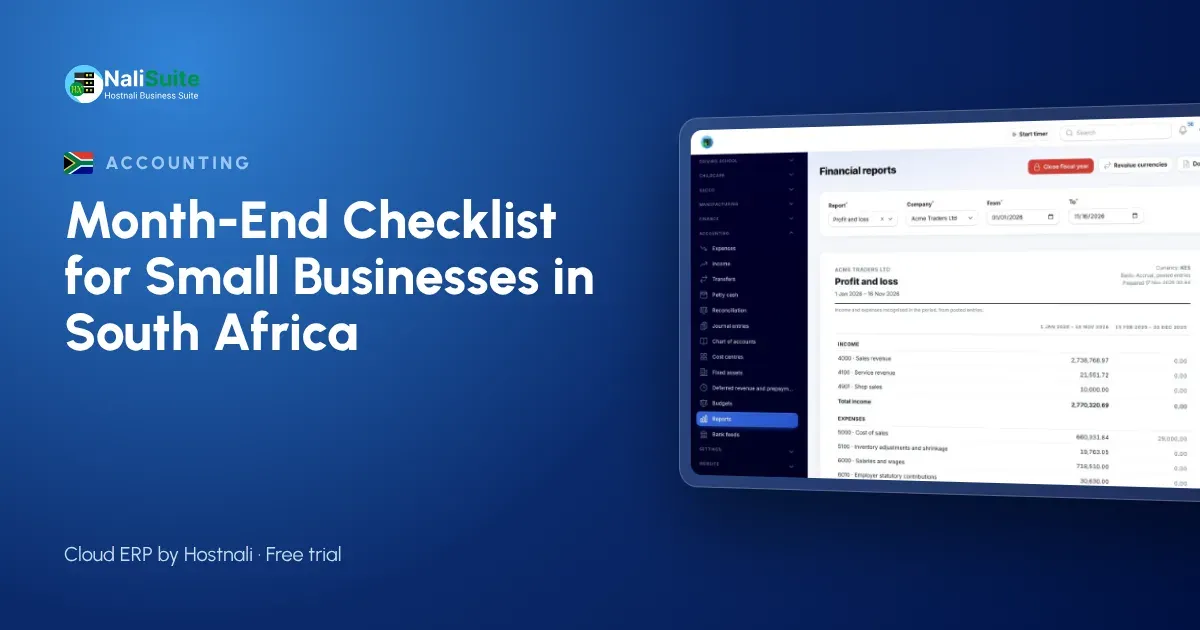
The fix: Run a profit and loss report for the month and read it next to the bank balance. If they tell different stories, find out why.
Mistake 2: Card and EFT payments that never reach the books
Card machines, instant EFTs and payment links settle into your account in batches, minus fees. If you record only the net amount, sales are understated and the fees disappear.
The fix: Record each sale at its full value and the provider’s fees as a separate cost. NaliSuite Accounting imports bank statements and suggests the invoice or sale each line belongs to; the bank reconciliation feature shows how the matching works. Online payments taken from invoices through a provider such as Yoco are described on the online payments page.
Mistake 3: Supplier invoices arriving after the month is “done”
A supplier in Durban emails an invoice on the 4th for stock delivered on the 28th. If you record it in the new month, last month looks better than it was and this month worse.
The fix: Wait three or four working days before locking the month, and ask your regular suppliers to send invoices by then. Record each invoice using the delivery date.
Mistake 4: Debtors left to “sort themselves out”
Invoices that are 60 or 90 days old rarely pay themselves. They also affect your VAT if you account for VAT on invoices issued.
The fix: At every month end, sort unpaid invoices by age and act on each one:
| Age | Action |
|---|---|
| Current | Check the due date and contact details are right |
| 30 days | Reminder with a payment link |
| 60 days | Phone call and statement |
| 90 days and over | Payment arrangement, or discuss a write-off with your accountant |
NaliSuite Invoicing sends reminders and statements by email or WhatsApp, each with a link to pay online.
Mistake 5: Stock that only gets counted in February
Many businesses count stock once, before the tax year ends. Eleven months of shrinkage, damage and receiving errors then surface at once.
The fix: Count your top 20 to 50 items every month. Record each difference with a reason. The rest of the stock can be counted in rotation.
Mistake 6: Payroll figures nobody checks
PAYE, UIF and SDL go to SARS every month. If an employee’s salary changed mid-month or someone started late, the figures can be wrong without anyone noticing.
The fix: Before you submit, compare total payroll with last month and explain every difference: a new hire, overtime, a leaver. NaliSuite’s South African payroll calculates PAYE, UIF and SDL, and the free PAYE calculator is useful for checking one payslip.
Mistake 7: VAT worked out from incomplete records
If you are a VAT vendor, the standard rate is 15%. A VAT return prepared before the month is complete will need correcting later.
The fix: Prepare the VAT figures only after the steps above are done. Compare output VAT with input VAT and look for invoices with the wrong rate or no valid tax invoice from the supplier. Confirm your filing period and deadline on SARS eFiling.
Mistake 8: Never locking the month
Without a lock, someone can post into a closed month months later, and the figures you reported to the bank no longer match your books.
The fix: Lock the period once the reports are reviewed. Changes after that need a deliberate decision.
The printable checklist
Money
- Bank statements imported and every line matched
- Card and payment provider settlements matched, fees recorded
- Petty cash counted and receipts recorded
Creditors and debtors
- All supplier invoices for the month recorded with delivery dates
- Aged debtors reviewed and actions taken
Stock and staff
- Top items counted, differences recorded
- Payroll checked against last month; PAYE, UIF and SDL recorded
Tax and reports
- VAT figures prepared and checked
- Profit and loss, balance sheet and aged debtors reviewed
- Month locked
Example: a small engineering firm in Gqeberha
A firm with eight staff used to close its month whenever its bookkeeper visited. After moving to this checklist, the owner noticed that card fees had grown sharply after a change of provider, and that one customer had been paying 75 days late for a year. Neither was visible from the bank balance alone.
Frequently asked questions
How soon after month end should I close?
Within the first five working days. That leaves time for late supplier invoices without delaying your reports too much.
Can my bookkeeper do the close remotely?
Yes. With cloud software, a bookkeeper or accountant can do most of the close from anywhere once you give them access.
Do I still need my accountant if I close every month?
Yes, for annual financial statements, tax returns and advice. A monthly close makes their work quicker and usually cheaper.
What about POPIA?
Your books contain personal information about customers and staff. Give access only to people who need it and keep records secure.
Try NaliSuite
NaliSuite brings invoicing, bank matching, payroll and accounting for South African businesses into one cloud system. Plans start at R 38 a month with a free trial; see the plans or read more about NaliSuite.