 ZAR
 KES - Kenya
 UGX - Uganda
 TZS - Tanzania
 RWF - Rwanda
 NGN - Nigeria
 USD - Zimbabwe
 GHS - Ghana
 ETB - Ethiopia
 ZMW - Zambia
 USD - International

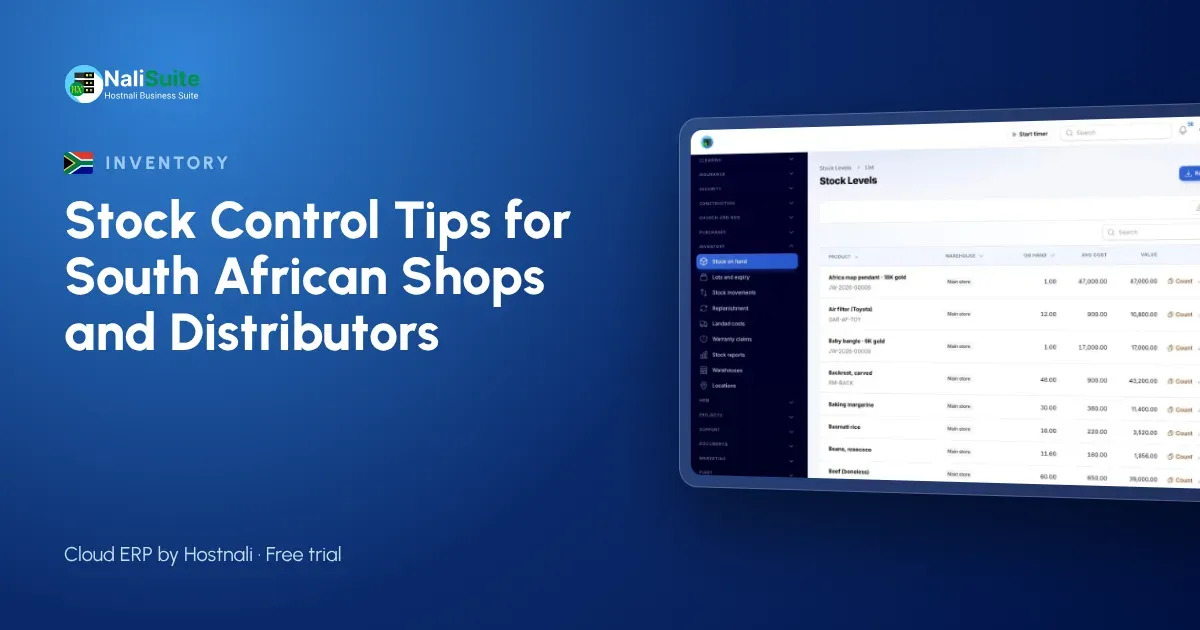
South African retailers compete with national chains that have mature stock systems. Independent shops, distributors and pharmacies can still match their discipline with the right habits and software. These tips focus on what makes the biggest difference: knowing what you have, where it is and when to reorder.
Track batches and expiry dates
Pharmacies, agro-dealers, food and cosmetics businesses all sell products that expire. Record the batch (lot) number and expiry date of every delivery, sell the oldest first, and check a report of stock expiring in the next 60 or 90 days every month.
Batch tracking also helps when a supplier recalls a product: you can see in seconds whether you have that batch and where it went.
Stock pressures in South Africa
Shrinkage is a real cost for South African retailers, from shoplifting to errors at receiving. Many independents also run more than one store, which means stock in two or three places and transfers between them.
Suppliers in Gauteng or the Western Cape often deliver weekly, so a reorder point that ignores lead times leaves you with empty shelves for days. And because stock values feed your VAT and income tax records, the numbers need to stand up to scrutiny.
Stop stock walking out of the door
Shrinkage is the gap between what your records say and what is on the shelf. Some of it is theft, but much is simple error: deliveries not checked, sales not recorded, damaged goods not written off.
Check every delivery against the purchase order before you accept it, record damaged and expired goods as write-offs, and compare counts with records weekly. When the till and stock are one system, a gap stands out quickly instead of hiding until year-end.
Example: an electronics retailer in Durban
An electronics retailer in Durban sells cellphones, laptops and accessories from two stores. Every phone and laptop has a serial number recorded when it arrives and when it is sold. When a customer brings back a faulty device, staff find the sale and warranty date in seconds. A weekly cycle count of accessories, done a section at a time, keeps shrinkage visible without closing the store.
Transfers between the two stores mean a customer is never turned away for stock the other branch has.
Branches, depots and transfers
Once you have a second shop or a warehouse, give each its own stock location. Sales at each till reduce that location’s stock, deliveries go into the right one, and transfers move goods between them with a record of who sent what and when.
The payoff is simple: before you buy more, you can check whether another branch already has it.
Common stock mistakes in South Africa
- Signing for deliveries unchecked. Count first, sign second; note shortages on the delivery note.
- One reorder point for all stores. Each store sells differently, so each needs its own level.
- Writing off nothing. Damaged and expired goods that stay on the books inflate your stock value and your tax figures.
- Treating shrinkage as normal. Track it monthly; a sudden rise usually has a cause you can find.
Spot slow movers and dead stock
Stock that does not sell is cash you cannot use. Run a report of items with no sales in the last 60 or 90 days and decide what to do with each: discount, bundle with a fast seller, return to the supplier or stop reordering.
Do the same with overstock: lines where you hold months of sales. Ordering less, more often, keeps cash available for what actually sells.
Getting started in South Africa
Import your product list with cost, selling price, VAT setting and barcode, then do one full count to set opening stock per store. Set reorder points per store, because each store’s sales differ.
For serialised goods, record serial numbers on receiving and at the till. For deliveries, check every item against the purchase order before you sign the supplier’s delivery note. And at your financial year-end, run a full count and keep the stock valuation report with your records for your accountant and SARS.
Once the basics run, add cycle counts and a monthly shrinkage review.
Frequently asked questions
How often should I count stock?
Count fast-moving and high-value items weekly in small sections (cycle counts) and do a full count at least once a year, usually at your financial year-end.
How does the till affect stock?
Every sale through the point of sale reduces stock in that shop automatically, so you do not have to update stock by hand.
How do purchase orders help with stock?
Deliveries are checked against the order before they are accepted, so shortages and wrong items are caught before you pay the supplier.
Try NaliSuite
Ready to get stock under control? NaliSuite inventory with reorder rules, batches and branches is included in every plan from R 38 a month. Start a free trial.