 ZAR
 KES - Kenya
 UGX - Uganda
 TZS - Tanzania
 RWF - Rwanda
 NGN - Nigeria
 USD - Zimbabwe
 GHS - Ghana
 ETB - Ethiopia
 ZMW - Zambia
 USD - International

Plumbers in Pretoria, caterers in Cape Town and IT firms in Sandton all lose work to the same handful of quoting mistakes. The price is often not the problem. The problem is a quote that arrives late, is hard to understand or leaves the customer unsure what they are buying.
Here are ten common quotation mistakes, why they cost you jobs and how to fix each one. A short checklist at the end puts it together.
1. Taking days to reply
A homeowner with a burst geyser or a company planning a year-end function will not wait a week.
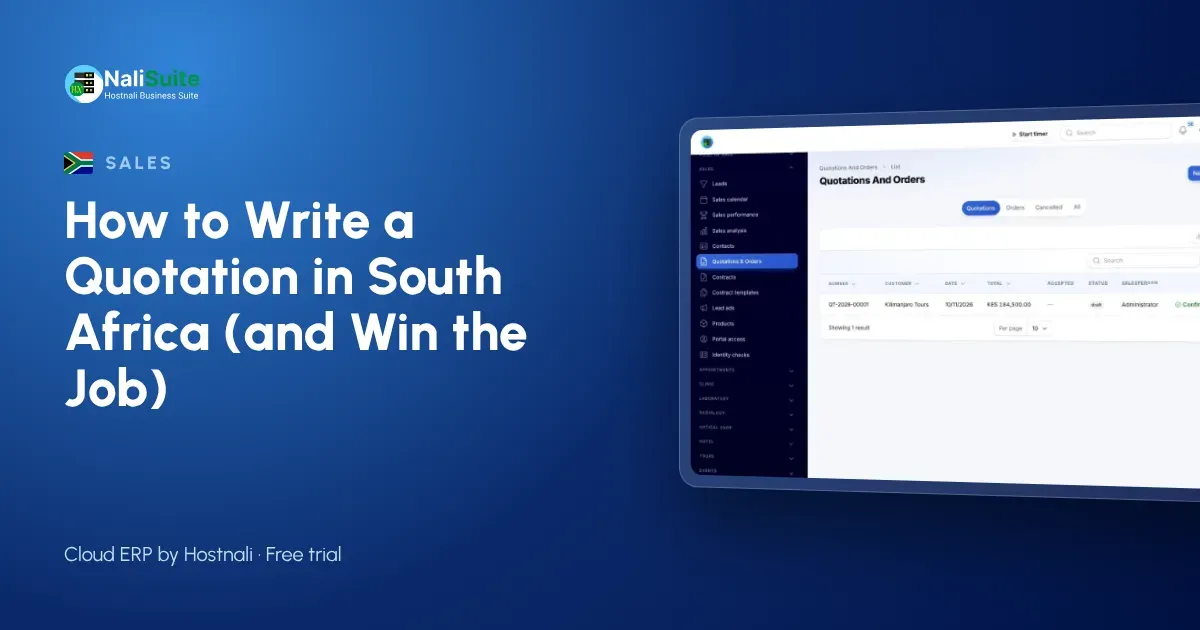
Fix: Aim to quote within 24 hours. Keep your products and services, with current prices, in one list so you are not rebuilding the quote each time. NaliSuite Sales and Quotations fills in your items, prices and VAT so a quote takes minutes.
2. A single number with no breakdown
“R…, all in” invites the customer to compare you with a cheaper competitor without knowing what each includes.
Fix: Break the quote into lines: materials, labour, call-out, transport. The customer sees the value and can see where any saving would come from.
3. Vague descriptions
“Electrical work” or “website” means different things to different people.
Fix: Describe the job exactly: “Supply and install a 150-litre geyser, including isolator, drip tray and certificate of compliance.” Also list what is excluded.
4. VAT that confuses
Some quotes add VAT without saying so; others charge VAT when the business is not a VAT vendor.
Fix: If you are registered, show your VAT number, the amount before VAT, VAT at 15% and the total including VAT. If you are not registered, do not add VAT. The free VAT calculator helps when a customer asks for an inclusive price. When the job is done, the invoice you issue must meet SARS’s tax invoice requirements.
5. No validity date
A customer comes back four months later, expecting the same price, after your supplier has raised theirs.
Fix: State clearly how long the quote is valid, typically 14 or 30 days, and that prices may change after that.
6. Missing business details
Corporate buyers need your registered name, registration number, VAT number and sometimes your B-BBEE certificate. Without them the quote stalls in their approval process.
Fix: Put your full business details in the header of every quote, and keep your supporting documents ready to attach.
7. No payment terms
If the quote does not say when you expect to be paid, the customer will decide for you, usually later than you would like.
Fix: State a deposit (if you need one), when the balance is due and how to pay: EFT, card or an online payment link.
8. One option only
Offering only one option forces a yes or no.
Fix: Offer a standard and a premium option, or add optional lines the customer can include. In NaliSuite, optional lines and discounts can be added to any quote, so the customer sees both choices in one document.
9. Acceptance that needs a printer
Asking a customer to print, sign, scan and email a quote slows everything down.
Fix: Let them accept online. NaliSuite sends each quotation as a branded PDF with a secure link; the customer accepts with a click, and you are notified straight away.
10. Never following up
Many quotes are simply forgotten in a busy inbox.
Fix: Call or message two or three days after sending. Track every quote’s status in the CRM app, so you can see what is pending, won or lost and spot patterns: maybe you lose most quotes on a certain kind of job.
From quote to paid invoice
Once accepted, the quote should become an invoice without anyone retyping it. In NaliSuite, the accepted quotation becomes a sales order (reserving stock in inventory if you hold any) and then an invoice. NaliSuite Invoicing can include a link for the customer to pay online, explained on the online payments page.
Quotation checklist
- Business name, registration and VAT number
- Customer name, company and contact
- Quote number, date and validity
- Clear scope, with exclusions
- Line items with quantities and prices
- VAT shown correctly (or not at all if unregistered)
- Deposit, payment terms and methods
- Options or optional lines where useful
- Easy way to accept
- Follow-up date in your diary
Frequently asked questions
Is a quotation a contract in South Africa?
A quotation is an offer. When the customer accepts it, a contract can arise on its terms. For larger jobs, have your standard terms reviewed by an attorney.
Should I charge a call-out or quoting fee?
Many trades charge a call-out fee for site visits and credit it against the job if the customer goes ahead. State it upfront.
How do I handle extra work that comes up mid-job?
Quote the extra work separately and get it accepted before doing it. That avoids disputes when you invoice.
What about customer data under POPIA?
Quotes contain personal information. Store them securely and only share them with people who need them.
Try NaliSuite
NaliSuite helps South African businesses send quotes customers accept online, then invoice and get paid from the same record. Plans start at R 38 a month with a free trial; see the plans or read more about NaliSuite.