 ZAR
 KES - Kenya
 UGX - Uganda
 TZS - Tanzania
 RWF - Rwanda
 NGN - Nigeria
 USD - Zimbabwe
 GHS - Ghana
 ETB - Ethiopia
 ZMW - Zambia
 USD - International

Pricing is one of the few decisions that changes your profit overnight. Raise a price by a small amount and, if customers stay, almost all of the difference is extra profit. Get it wrong and you can be busy every day while the bank balance stays flat.
Rather than another formula, this guide looks at the seven pricing mistakes South African small businesses make most often, and what to do instead.
Mistake 1: Pricing from the supplier invoice alone
The supplier’s price is where your cost starts, not where it ends. Delivery from Johannesburg to your shop in Polokwane, packaging, card machine fees, breakages and load-shedding costs such as generator diesel or an inverter you had to buy all have to be paid from sales.
Instead: total up everything it takes to sell a batch, divide by the units in it, and call that your landed cost. Add a share of monthly overheads such as rent, wages and electricity. Never price below this number.
Mistake 2: Confusing markup with margin
A 40% markup on cost is not a 40% margin. If something costs 100 and you add 40%, you sell at 140 and keep 40, which is about 29% of the selling price. Plenty of owners think they earn far more than they do because of this mix-up.
Instead: decide your target margin and divide cost by (1 – margin). For a 35% margin, divide cost by 0.65.
Mistake 3: Forgetting that VAT is not yours
If you are registered for VAT, 15% of a VAT-inclusive price belongs to SARS. Owners who work out their profit on the till total, VAT included, overstate it every month.
Instead: calculate margins on prices excluding VAT, and decide whether your price tags include it. Consumers in South Africa expect prices that include VAT; business buyers usually want it shown separately. The free VAT calculator takes VAT out of an inclusive price in a second.
Mistake 4: Matching the cheapest competitor on everything
Chains can live on thin margins because of their buying power. A neighbourhood deli in Durban or a specialist bike shop in Stellenbosch usually cannot.
Instead: pick a few items that customers notice and compare – milk, bread, a popular part – and keep those keen. Price the rest on the value you add: advice, quality, local delivery, opening hours, the fact that you know your regulars by name.
Mistake 5: Discounts without rules
“Give him ten percent, he’s a regular” is how margins vanish. One staff member is generous, another is strict, and nobody knows what discounts cost you in a month.
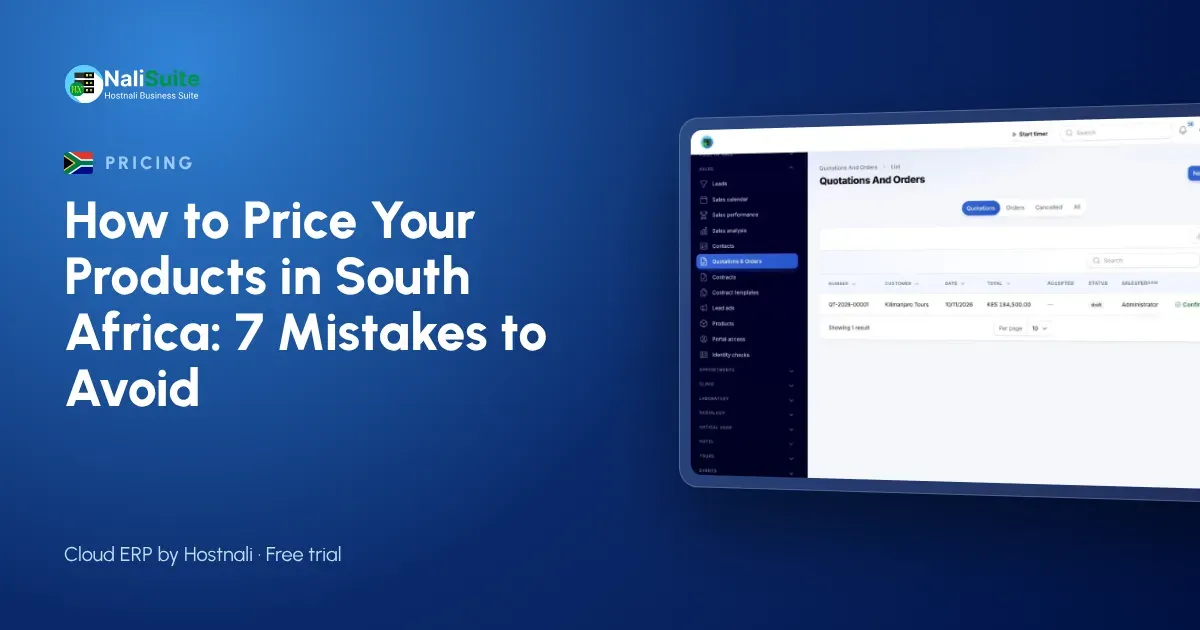
Instead: write down who gets a discount, how much, and when. Put the rules into price lists. In the NaliSuite sales app, price lists can be set by customer group or quantity, and promotions can be given a start and end date so they stop on time. The same prices flow to the point of sale.
Mistake 6: Never reviewing prices
Electricity tariffs, fuel and supplier prices move every year, often more than once. A price that was healthy in January can be a loss-maker by September.
Instead: check your margin by product every month. When a supplier sends a new price list, update your costs that day. NaliSuite inventory keeps average or FIFO costs per product, with freight added as a landed cost, so you see real margins rather than guesses.
Mistake 7: Being afraid to raise prices
Many owners would rather absorb a cost rise than tell customers. Over time this eats the business.
Instead: raise prices in small, regular steps, explain briefly if it helps (“supplier increase”), and keep the quality and service that made people choose you.
Putting it together: a sample calculation
A small craft brewery sells cases of beer to bars. Using plain example numbers:
| Item | Per case |
|---|---|
| Ingredients and bottles | 180 |
| Labels, caps and cartons | 25 |
| Delivery and fuel | 20 |
| Share of rent, wages and power | 55 |
| Full cost | 280 |
For a 30% margin before VAT, 280 ÷ 0.7 = 400. With VAT at 15%, the invoice total is 460. Bars ordering ten cases or more get a separate price list at 380 before VAT, still comfortably above cost.
Test before you commit
Before changing prices across the shop, test a new price on a few items for a few weeks and watch what happens to sales. If volume barely moves, the higher price is working.
Frequently asked questions
How do I price a brand-new product?
Start from cost and target margin, then test the price with a small group of customers. It is easier to bring a price down later than to push it up.
Should my online and in-store prices be the same?
They can differ, but customers notice. If online includes delivery or costs you more in card fees, a small difference is fair; explain it.
Can I charge different prices to different customers?
Yes, as long as you are consistent within a group, for example wholesale versus retail. Use price lists so staff apply them correctly.
Try NaliSuite
NaliSuite connects your costs, price lists, quotes and till so every price is based on today’s numbers. Plans start at R 38 a month, shown in rand, with a free trial. View the plans.