 ZAR
 KES - Kenya
 UGX - Uganda
 TZS - Tanzania
 RWF - Rwanda
 NGN - Nigeria
 USD - Zimbabwe
 GHS - Ghana
 ETB - Ethiopia
 ZMW - Zambia
 USD - International

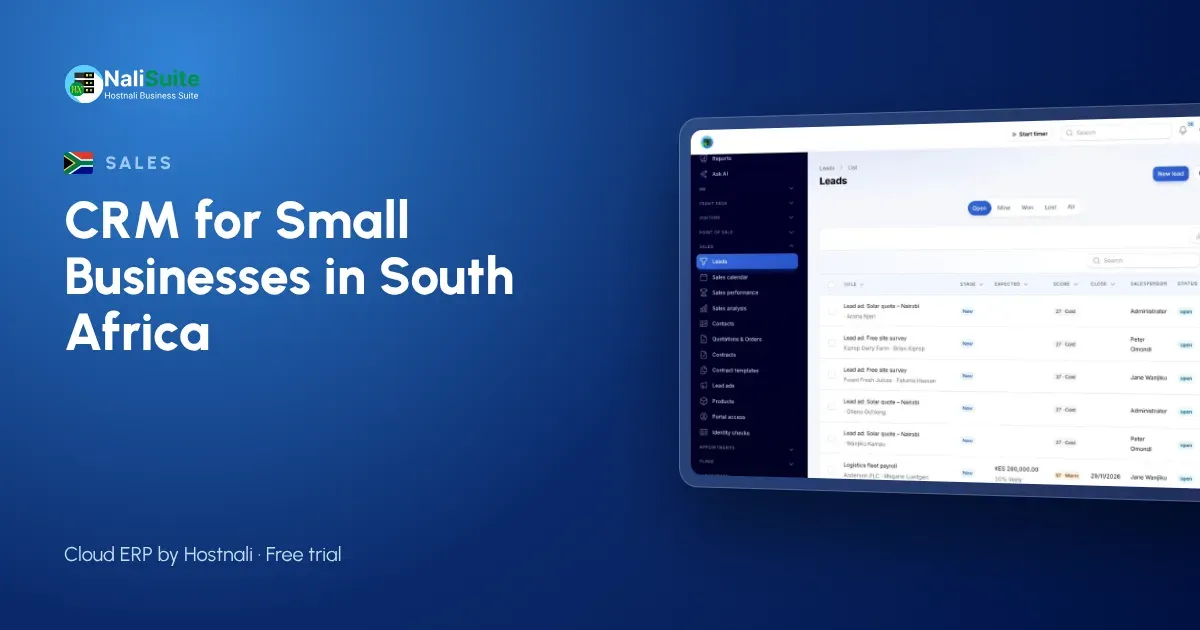
Small businesses in South Africa compete hard for every customer. Losing a lead because nobody called back is an expensive mistake, and it happens more often than most owners think.
A CRM keeps every lead, call and quotation in one place. This guide shows how to set one up and use it every day.
What a CRM actually does
A CRM replaces the notebook, the spreadsheet and the WhatsApp chats you scroll through looking for a phone number. Every lead lives on one record, with every message, call and quotation attached.
Pipeline stages that fit a small business
Name your stages after what actually happens in your business. A simple version looks like this:
| Stage | What it means |
|---|---|
| New lead | An enquiry has arrived |
| Contacted | You have replied or called |
| Quotation sent | The customer has a price |
| Negotiation | Questions, changes or a visit |
| Won or lost | They paid a deposit, or chose someone else |
Where your leads come from
If leads arrive in five places, someone will miss one. Bring them together: WhatsApp chats, website forms, calls, walk-ins and Facebook and Instagram lead ads should all land in the same CRM, tagged with where they came from.
Example: a car dealership in Pretoria
Consider an example used-car dealership in Pretoria. Buyers enquire through the website, a listing site, a Facebook ad and walk-ins. Salespeople wrote names on sticky notes and followed up when they remembered.
With a CRM, every enquiry becomes a lead linked to the car it is about. Test drives are booked as activities, finance applications are tracked as a pipeline stage, and the manager sees which salesperson has the most hot leads. When a car sells, interested buyers can be offered similar stock.
Follow-ups that do not slip
Most deals are lost through silence, not rejection. Set a follow-up date every time you speak to a lead, and let the CRM remind you. If a quotation has had no answer for a few days, call.
From quotation to invoice
Quotations are where many deals stall. Sending them from NaliSuite Sales means you can see which are still open, follow up on them, and turn the accepted ones into invoices straight away.
Linking sales to invoicing
When a deal is won, the accepted quotation turns into an invoice without retyping. Customers pay by card or EFT from a link on the invoice. See online payments in NaliSuite.
What to measure
| Number | Why it matters |
|---|---|
| New leads per week | Is marketing working? |
| Quotations sent | Is the team moving leads forward? |
| Won deals | Is the pipeline turning into revenue? |
| Average deal size | Are you selling the right things? |
Keeping the team on board
South African sales teams are often busy with walk-ins, calls and paperwork at the same time. Keep the CRM quick to use: short forms, a mobile view, and leads from the website and ads created automatically so nobody retypes them.
Agree a few simple rules, such as answering new enquiries within the working day and never leaving a lead without a next step. Review the pipeline together every week.
Use the lost reasons. If many buyers walk away over finance or price, that is information you can act on, whether by changing stock, adding finance partners or adjusting prices.
Choosing a CRM that fits
Pick a CRM your team will actually open every day. That usually means a simple pipeline board, a mobile app, reminders, and quotations built in. Check that it can import your current customer list, that it connects to WhatsApp and your website forms, and that won deals can become invoices without retyping. Test it with a week of real enquiries before you commit.
POPIA and customer data
Customer details in a CRM are personal information under the Protection of Personal Information Act (POPIA), overseen by the Information Regulator. Collect only what you need, tell customers how you use it, keep it secure and respect their choice to opt out of marketing.
A CRM with access by role and a record of consent on each contact helps you meet those duties.
Frequently asked questions
Does POPIA allow me to email leads?
Marketing needs a lawful basis such as consent, and people must be able to opt out. Record consent and opt-outs on each contact.
Can several salespeople share one CRM?
Yes. Each salesperson sees their own leads, and managers see the whole pipeline.
How much time does a CRM take each day?
A few minutes per salesperson: logging calls and setting next steps. It saves far more time than it takes.
Is a CRM only for sales teams?
No. Any business that follows up enquiries, such as schools, clinics and service firms, benefits from one.
Try NaliSuite
Every NaliSuite plan includes the CRM, contacts, quotations and invoicing, from R 38 a month. See what is included.